
How Minecraft’s Axolotls Boosted the Aquarium Industry
Post Covid, the UK’s aquarium industry hit hard times. The Cost of Living Crisis started in 2021 and by 2022 there were one million fewer aquariums in people’s homes, due largely to increased energy prices. But one aquatic animal, (or rather one video game that featured it,) managed to carve out a section of the aquarium industry that we are still reaping the rewards of today. The game is called Minecraft, it is played by 180 million users worldwide, and it features Axolotls. Now every kid on the planet wants to keep one in real life.
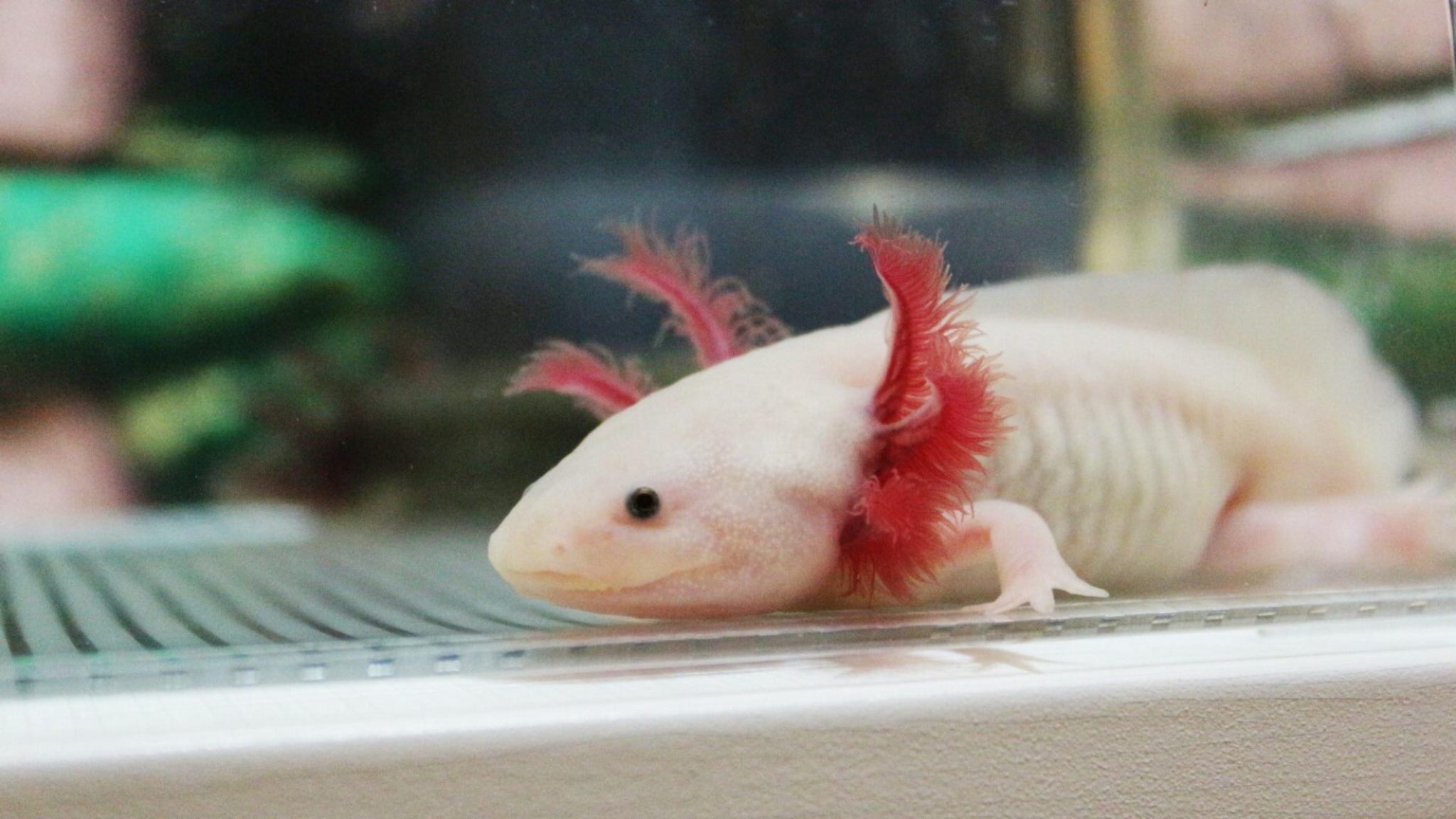
According to Minecraft Wiki, An axolotl is a passive aquatic mob found in lush caves that hunts most other aquatic mobs and can assist players with aquatic combat and grant them Regeneration. They can also be carried around in a bucket. That means very little to me, but I do know they’re a type of salamander that reaches adulthood without undergoing metamorphosis, they are fully aquatic, and I’ve worked with and sold lots of them.
The benefits of Axolotls to the aquatic trade
Because Axolotls are fully aquatic they can be kept in aquariums, and don’t need basking areas and specialized lighting like terrapins and turtles do. They don’t need any lighting other than ambient room light, some low-energy LEDs at most, and that helps keep their start-up cost and running costs low. And despite coming from Mexico, they don’t like it hot either, again with British living room temperature sufficing and not needing an additional heater. Another huge selling point when energy prices are sky high. They do need a filter to deal with their waste of course, but this can be a simple internal canister filter or air-powered sponge filter, both of which start at around twenty pounds and use very little energy. In terms of energy consumption Axolotls have a low carbon footprint and are cheap to provide for their husbandry needs.
Axolotl Food
Axolotls are also easy to feed. Every Minecraft player knows they can be fed on bloodworms, both of which only come from aquatic stores in frozen or live form. Large ones will take earthworms from the garden, and they’ll eat sinking catfish pellets with relish too. Switched-on aquatic companies produce Axolotl diets in pellet form, and when offered it as an extra food, nine out of ten owners will pick some up in-store.
Axolotl Conservation
Lastly is their conservation status. Wild ones are critically endangered with their last stronghold (if you can call it that,) being a man-made lake in Mexico City. But there are millions of them bred for the pet trade worldwide, ALL axolotls are captive-bred, and you can even obtain them from UK suppliers (or hobbyists,) for zero air miles. It’s win, win, win…
Rightly or wrongly, the pet trade booms in relation to media sensations involving animals. First, there was Teenage Mutant Ninja Turtles, then Finding Nemo, and now Minecraft. In an industry that struggles to grow at times, Minecraft’s Axolotls offered a much-needed boost, the animals themselves are easy to accommodate and look after, and there’s even a Minecraft Movie scheduled for April 2025.
I shudder to think how many more UK aquatic stores would have gone under if it wasn’t for Minecraft’s unknowing Axolotl lifeline.


